
[ms_breadcrumbs]
Immigration Status and Eligibility for Public Funds
Under UK immigration laws, access to certain public services is dependent on a person’s immigration status. This chapter provides a summary of common immigration status types and outlines how these will typically impact on a person’s ability to claim public funds, specifically: social security benefits, homelessness assistance and a local authority allocation of social housing.
Later chapters of the guidance set out ways in which a local authority can effectively establish a person’s immigration status and what other services a person may be able to access if they are faced with homelessness, including support from social services.
Key points
- Local authority officers working in frontline services need to be able to understand how a person’s immigration status affects their entitlement to benefits and other services, in order to ensure that people receive all of the services they are entitled to, establish correct referral routes, and take any necessary steps to alleviate destitution.
- People who have No Recourse to Public Funds (NRPF) will not be able to access most social security benefits, homelessness assistance and a local authority allocation of social housing, but in some cases may be able to receive accommodation and financial support from social services. For example, the local authority may have duties under social work legislation to support NRPF families with children, or vulnerable adults. Even when a person’s immigration status does not prevent them from accessing social security benefits, they may experience problems obtaining these, for example, because they do not meet other eligibility criteria linked to their residency in the UK, they cannot evidence the length of their residence in the UK, or because their entitlements are misunderstood.
It is important to be aware that a person’s immigration status may change. For example, a person might enter the UK with limited leave to remain as a student, and after completing their studies, might then apply to for leave to remain as a work permit holder, or as the spouse of a British citizen.
- Accessing specialist immigration advice is always important for the purpose of resolving cases and improving outcomes for children and vulnerable adults. Local authorities must therefore ensure that people are actively referred to regulated immigration advisers who are qualified to support people address their immigration matters with the Home Office.
- In most cases, establishing a pathway out of destitution will involve accessing specialist immigration advice. It is a criminal offence to provide immigration advice that is specific to a person’s individual circumstances unless the adviser is a member of the appropriate regulatory bodies for solicitors and advocates or is an immigration adviser regulated by the Immigration Advice Authority (IAA). Local authorities must therefore ensure that staff do not provide immigration advice to individuals unless they are accredited to do so with an appropriate regulatory body and should consider establishing lists of local regulated immigration advice services to signpost people to.
2.1 Common Types of Immigration Status
The UK’s immigration laws are complex, and it can be difficult to establish whether or not a person has permission to enter or remain in the UK, and if so, on what basis. It is the responsibility of the Home Office to decide what a person’s immigration status is, usually after the person has made an application, and only an IAA-regulated immigration adviser or member of the appropriate regulatory bodies for solicitors and advocates can lawfully advise an individual on their immigration matter.
However, social workers and other local authority officers will need to be able to identify a person’s immigration status and understand how this impacts on their entitlements, in order to determine what type of support and services may be available to migrants and their families. This section provides a basic summary of the different types of immigration status people may have. Please also refer to the glossary.
Subject to Immigration Control
People who require permission to enter the UK, or permission to stay in the UK to live, work and study here, are referred to as people ‘Subject to Immigration Control’. Unless the UK government has granted this permission (referred to as ‘Leave to Enter’ or ‘Leave to Remain’), or a form of temporary admission called ‘Immigration Bail,’ a person subject to immigration control is unlawfully resident and can be excluded, removed or deported from the UK.
Every person requires leave to enter or remain in the UK unless they are:
- a British citizen
- an Irish citizen; or
- a Commonwealth citizen with the ‘Right of Abode’
British Nationality and British Citizenship
British nationality law is complex, and there are 6 different types of British nationality. They are: British citizenship, British overseas territories citizen, British overseas citizen, British subject, British national (overseas) and British protected person.
Some British nationals, such as British Nationals (Overseas) (BN(O)) may hold a British passport but they are subject to immigration control and do not have the automatic right to live or work in the UK. For more information about the rights and entitlements of BN(O) and BN(O) visa holders, please see the section on “British Nationals (Overseas) (Hong Kong)” below.
British citizens, on the other hand, automatically have the ‘right of abode’ in the UK, which means that they can enter the UK when they wish to, even if they have never lived here before. British citizenship may be acquired by birth, by descent, or by making an application to the Home Office to register (a child) or naturalise (an adult).
A child will not automatically be British solely by being born in the UK, following a change in the law that has applied since 1January 1983. You can check if someone might be a British citizen – or might be eligible to apply for British citizenship.
Evidence of British citizenship can include a valid British passport, or a Certificate of Registration or Naturalisation. From
25 February 2026, British citizens who are dual nationals of another country must possess either a British passport, or a Certificate of Entitlement in their foreign passport, in order to travel to the UK. See guidance here.
Irish Citizenship
Irish citizens hold a unique status in the UK under the Common Travel Area (CTA) arrangements, a long-standing arrangement between the UK, the Crown Dependencies (Bailiwick of Jersey, Bailiwick of Guernsey and the Isle of Man) and Ireland.
Under the CTA, Irish citizens can move freely and reside in the UK without holding any leave to enter or reside, including a visa, any form of residence permit or employment permit.
Irish citizens also enjoy associated rights and privileges, including the right to work, study and vote in certain elections, as well as to access social welfare benefits and health services.
Commonwealth Citizens
Some Commonwealth citizens have the ‘right of abode’. They may have gained this right either because of who their parents are, or through marriage.
British nationality law is complex and British citizenship may be acquired by birth, descent, or by making an application to the Home Office to register or naturalise. People who have the ‘Right of Abode’ can apply for a Certificate of Entitlement as evidence.
EEA & Swiss nationals
People who are from European Economic Area (EEA) countries,1 and their family members, were exempt from immigration control during the period 1 January 1973 to 31 December 2020. During this period, EEA nationals could move freely and reside in the UK without holding any leave to enter or reside, including a visa, any form of residence permit or employment permit, so long as they were exercising rights arising under key treaties linked to the UK’s membership in the European Union (‘EU treaty rights’).2
A ‘Right to Reside’ was acquired through exercising EU treaty rights:
- During the first three months of residence (initial right of residence)
- When an EEA national was: jobseeking, working, self-employed, self-sufficient or
studying - When the person is the family member of an EEA national with a right to reside
It was possible for EEA nationals to apply for documentation of their exercise of EU treaty rights during this period, but they were not required to do so. Many did not do so. This means that you may come across documentation from this era held by some EEA nationals but not others. The absence of a document does not mean they were in the UK unlawfully.
In 2016, the UK voted to withdraw from the European Union (referred to as ‘Brexit’), and as a result, from 1 January 2021, EEA nationals became subject to immigration control and could no longer rely on EU treaty rights to acquire a right to reside.
EEA nationals and their family members who were living in the UK on, or before, 31 December 2020 were eligible to apply for a form of Leave to Remain under the EU Settlement Scheme (EUSS). An EEA national who makes a valid application under the EUSS will receive a Certificate of Application, which also confirms the holder’s right to work and right to receive benefits, until a decision is made on that application.
EEA nationals arriving in the UK for the first time on, or after, 1 January 2021, arrive subject to immigration control, and are generally not eligible to apply under the EUSS (unless they are eligible joining family members of pre-settled or settled status holders already in the UK).
The following applies to:
- EEA Nationals who entered the UK on or before 31 December 2020;
- EEA and Non-EEA Family Members in a subsisting relationship with an EEA National who
entered the UK on or before 31 December 2020 (even if the family member entered
the UK for the first time on or after 1 January 2021)
| TYPE OF STATUS | DESCRIPTION | RIGHTS AND ENTITLEMENTS |
| Pre-settled status | Limited leave to remain granted for up to five years under the EU Settlement Scheme. | Can obtain indefinite leave to remain under the EU Settlement Scheme (called Settled Status) after five years’ continuous residence in the UK. No restrictions on employment or study. There may be additional eligibility criteria for accessing public funds. |
| Settled status | Indefinite leave to remain granted under the EU Settlement Scheme. | There is no time limit on the person’s length of stay in the UK but may be lost if they leave the UK for five years or longer. No restrictions on employment, study or access to public funds. |
| EU Settlement Scheme family permit | A document issued overseas to allow a non-EEA family member to enter the UK with or to join the EEA national. | The permit is valid for six months and normally, the person would apply for either Settled Status or Pre-Settled Status under the EU Settlement Scheme within three months of arriving in the UK. No restrictions on employment or study. There may be additional eligibility criteria for accessing public funds. |
The following applies to:
EEA Nationals who entered the UK for the first time on or after 1 January 2021
| TYPE OF STATUS | DESCRIPTION | RIGHTS AND ENTITLEMENTS |
| Short-term visitor | EEA nationals are permitted to enter the UK for short terms visits up to 6 months without needing to apply for a residence permit. | Will have conditions including a restriction on employment, long term study or access to public funds. Cannot be extended. To remain in the UK for more than 6 months, a person must make an application for another form of Leave to Remain, and typically this cannot be made in-country so they must leave the UK in order to do so. |
Limited Limited | Immigration permission issued for a time limited period. Leave may be granted under the Immigration Rules, outside of the rules or on a discretionary basis. | Will have conditions imposed, for example, restrictions on employment , study and access to public funds. A person’s eVisa will state whether they have recourse to public funds. If No Recourse to Public Funds (NRPF) and at risk of destitution, signpost to a legal representative to find out whether they can apply to Home Office for leave to be varied to remove the NRPF condition by making a change of conditions application. A person may be on a settlement route depending on the type of leave they have, which means they can apply for indefinite leave to remain after a specified period of time. |
Indefinite Indefinite | Immigration permission with no time limit on the length of stay in the UK. Also sometimes referred to as ‘Settled Status’. | May be lost if the person leaves the UK for two years or longer. No restrictions on employment, study or access to public funds. |
British Nationals (Overseas) Hong Kong
A British National (Overseas) is someone who was previously a British overseas territories citizen living in Hong Kong who registered as a British National (Overseas) before 1 July 1997.
This is one of the 6 different types of British Nationality. British Nationals (Overseas) can hold a British passport and do not need to apply for residence permits to spend up to 6 months in the UK, but they do not have the ‘Right of Abode’. BN(O) status cannot be acquired by descent, by children of BN(O) holders.
In response to the Chinese Government’s imposition of the national security legislation on Hong Kong in 2020, the UK Government created a new category of visa – the British National (Overseas) Visa (‘BN(O) visa’), which was launched in January 2021.
BN(O) status holders who wish to remain in the UK for longer than 6 months are eligible to apply for this visa, along with their children, grandchildren, and adult dependent relatives.
From November 2022 onwards, individuals aged 18 or over who were born on or after 1 July 1997 and who have at least one BN(O) parent are also able to apply to the route independently of their BN(O) parent.
For more information on supporting BN(O) visa holders in Scotland, visit the Hong Kong Welcome Hub.
| TYPE OF STATUS | DESCRIPTION | RIGHTS AND ENTITLEMENTS |
| BN(O) Visa | Leave to Remain for a period of either 2 years 6 months or 5 years | No restrictions on employment or study. Eligible to apply for settlement after 5 years of continuous leave. |
| Indefinite Leave to Remain | Immigration permission with no time limit on the length of stay in the UK. | May be lost if the person leaves the UK for two years or longer. No restrictions on employment, study or access to public funds. |
Ukrainian Citizens
The Ukraine Schemes were launched in March 2022, as a response to the Russian invasion of Ukraine, in order to provide safe, legal routes to the UK for Ukrainians and their family members fleeing conflict.
There are four Ukraine schemes to be aware of:
- Ukraine Family Scheme – for Ukrainians with relatives in the UK – this closed to new applicants on 19 February 2024
- Homes for Ukraine – enables people in the UK to sponsor and host Ukrainians – this remains open
- Ukraine Extension Scheme – enabled the extension of leave for Ukrainians already temporarily resident in the UK – this closed to new applicants on 4 February 2025
- Ukraine Permission Extension (UPE) – extends all three schemes above and remains open
The Scottish Super Sponsor Scheme operated as part of the Homes for Ukraine Scheme. It was indefinitely paused for new applications on 13 July 2022.
The Homes for Ukraine scheme is a means by which Ukrainian nationals (and family members) who lived in Ukraine before 1 January 2022, can apply to enter the UK. They must have a ‘sponsor’ in the UK who is either British, Irish, or has indefinite leave to remain in the UK.
The Ukraine Permission Extension Scheme (UPE) is for Ukrainians who obtained permission to enter or reside in the UK under one of the above schemes. It is a free application which provides an extension of 18 months’ limited leave to remain in the UK. UPE holders can then apply for an additional 24 months Limited Leave to Remain when they have 90 days or less remaining on their 18 month UPE.
Any time spent residing in the UK using one of the Ukraine Schemes does not count towards continuous residence for settlement.
Upon arrival in Scotland, new Homes for Ukraine guests may be eligible for some help and support from local authorities. Welcome accommodation is not routinely offered however, except for the very small number of remaining Super Sponsor visa holders. There may be discretion in exceptional circumstances.
| TYPE OF STATUS | DESCRIPTION | RIGHTS AND ENTITLEMENTS |
| Ukraine Family Scheme | Leave to Remain for a period of 3 years, to join a family member based in the UK | No restrictions on employment, study or access to public funds. Does not count towards eligibility to apply for settlement at a later stage. |
| Homes for Ukraine (Ukraine Super Sponsorship Scheme) | Leave to Remain for a period of 3 years, sponsored by a UK household (sponsor must be British, Irish or hold Indefinite Leave to Remain in the UK). | No restrictions on employment, study or access to public funds. Does not count towards eligibility to apply for settlement at a later stage. |
| Ukraine Extension Scheme | Leave to Remain for a period of 3 years, if you previously held Leave to Remain in the UK that expired between 1 January 2022 and 16 May 2023 | No restrictions on employment, study or access to public funds. Does not count towards eligibility to apply for settlement at a later stage. |
| Ukraine Permission Extension Scheme | Grants permission to remain for an extra 18 months if you have a Ukraine schemes visa, with an option to then apply for a further 24-month extension. | No restrictions on employment, study or access to public funds. Does not count towards eligibility to apply for settlement at a later stage. Current holders of UPE can apply for an extension within 90 days of their leave expiring. |
Citizens of All Other Countries
Citizens of all other countries are subject to immigration control, and must obtain permission to enter or remain in the UK. This will involve applying for entry clearance (if they are outside of the UK) and Leave to Enter (on arrival to the UK), or Leave to Remain (within the UK) under the UK Immigration Rules.
These rules set out the categories under which a person can apply, for example, to work, study, visit, join family or seek international protection. There will also be some instances where the Home Office may grant permission to remain in the UK on a discretionary basis or to prevent a human rights breach. Some key terms are set out in the table below.
A person who is living in the UK without any immigration permission, when they are required to have this under the UK’s immigration laws, may be unlawfully present and may also be described as having irregular immigration status or as a person without leave.
Leave to Enter – Immigration permission issued by an Immigration Officer on entry to the UK. Most people are required to apply for prior entry clearance by submitting an application online and then attending a Visa Application Centre (VAC) abroad. Evidence will usually be provided as a vignette (stamp) in a passport.
Leave to Remain – Immigration permission issued by the Home Office, which is applied for from within the UK. An application is usually made by completing and submitting a form online. The outcome will usually be provided as a grant of status letter, and evidence of leave to remain displayed on an eVisa. Some people may still have a physical biometric residence permit (BRP) although these expired 31 Dec 2024. If you come across a person with a BRP and no eVisa, they should be assisted to apply for an eVisa as soon as possible.
| TYPES OF STATUS | DESCRIPTION | ADDITIONAL INFORMATION |
| Limited Leave to Enter / Remain | Immigration permission issued for a time limited period. Leave may be granted under the Immigration Rules, outside of the rules or on a discretionary basis. This includes:
| Will usually have conditions imposed, such as, restrictions on employment and access to public funds. If No Recourse to Public Funds (NRPF) and at risk of destitution, signpost to a legal representative to find out whether they can apply to the Home Office for leave to be varied to remove the NRPF condition by making a change of conditions application. A person may be on a settlement route depending on the type of leave they have, which means they can apply for Indefinite Leave to Remain after a specified period of time. |
| Indefinite Leave to Enter / Remain (Settlement) | Immigration permission with no time limit on the length of stay in the UK. | May be lost if the person leaves the UK for two years or longer. No restrictions on employment, study or access to public funds. |
| Visa Overstayer | A person who had Leave to Enter or Remain in the UK for a limited period and is currently without leave. This happens because their previous leave has expired, or their leave was ‘curtailed’ meaning it expired early. | Will be treated as unlawfully present unless an in-time application has been submitted, and may be issued with a removal decision and reporting instructions. Will not be able to work, has no recourse to public funds and may be subject to sanctions on certain services. |
It is important to be aware that a person’s immigration status may change. For example, a person might enter the UK with limited leave to remain as a student, and after completing their studies, might then apply to for leave to remain as a work permit holder, or as the spouse of a British citizen. This is called ‘switching’.
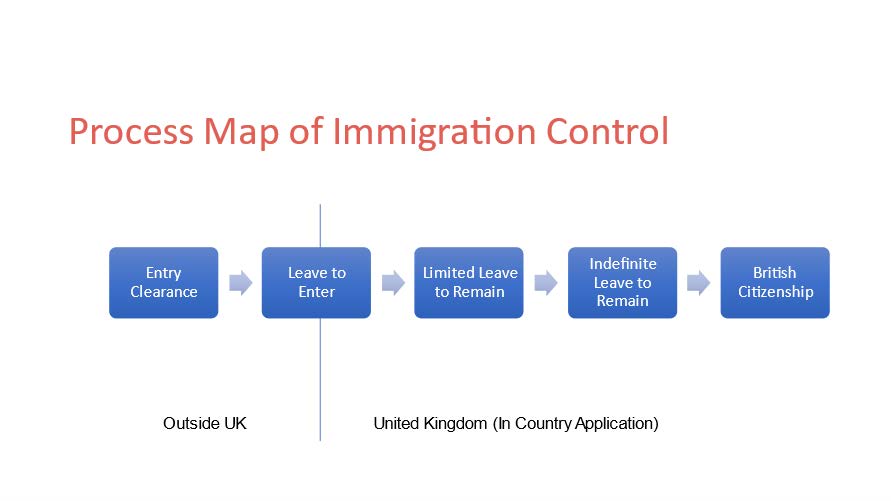
People who have held indefinite leave to remain (including Settled Status) for at least 1 year, and who meet minimum residence requirements in the UK, are eligible to naturalise as British citizens.
Finally, some forms of leave to remain are granted subject to the No Recourse to Public Funds condition. However, it may be possible to make a ‘Change of Conditions’ application which would then allow the person to access public funds, if they are at risk of destitution.
Protection (Asylum) Claims
The UK has signed the United Nations Refugee Convention 1951 (the ‘Refugee Convention’), and this means that we have agreed to offer sanctuary to people who are fleeing persecution in other countries.
People who are fleeing persecution can come from any country – including countries that may appear safe for some people, but are not safe for everyone. Data on the most common nationalities seeking asylum in the UK can be
found on the Home Office website.
The table below contains some common terms associated with people who have claimed asylum in the UK because they fear persecution in their country of origin, including the status they might acquire following the outcome of their asylum claim.
| TERM | DESCRIPTION | ADDITIONAL INFORMATION |
| Asylum seeker | A person who has made a claim to the UK government for protection (asylum) under the Refugee convention and is waiting to receive a decision from the Home Office on their application or from a court in relation to an appeal. | Has permission to live in the UK but may be subject to place of residence and reporting requirements. Does not have recourse to public funds. If destitute, will be accommodated and supported by the Home Office’s Asylum Support system. Will not usually have the right to work, although there are some exceptions.4 A person who has received a refusal from the Home Office on their asylum claim, and who has appealed in-time to the First Tier Tribunal, is still |
| Refugee | A person who has been recognised as having a well-founded fear of persecution in their country of origin for reasons of race, religion, nationality, membership of a particular social group, or political opinion under the Refugee Convention. | If claimed asylum as an adult before 2 March 2026, will be granted five years Limited Leave to Remain and can apply for Indefinite Leave to Remain after five years. If claimed asylum as an adult on or after 2 March 2026, will be granted 30 months’ limited leave to remain. Can apply for Indefinite Leave to Remain after five years but this is expected to increase to 20 years in 2026. If claims asylum as a child before or after 2 March 2026, will be granted five years’ limited leave to remain and can apply for Indefinite Leave to Remain after five years. No restrictions on employment, study or access to public funds. Had the right to apply for family reunion until the UK government announced a pause on new applications in September 2025. There may still be other routes for family members to join under the |
| Humanitarian Protection | A person who has been recognised as having a real risk of serious harm or well-founded fear of persecution in their country of origin, but not for any reason set out under the Refugee Convention. | If claimed asylum as an adult before 2 March 2026, will be granted five If claimed asylum as an adult on or after 2 March 2026, will be granted 30 months’ Limited Leave to Remain. Can apply for Indefinite Leave to Remain If claims asylum as a child before or after 2 March 2026, will be granted five years’ Limited Leave to Remain and can apply for Indefinite Leave No restrictions on employment, study or access to public funds. Had the right to apply for family reunion until the UK government announced a pause on new application in September 2025. There may still be other routes for family members to join under the immigration rules, these can be explored with immigration advice. |
| Unaccompanied Asylum Seeking Child (UASC) | Children and young people under the age of 18 who arrive in Scotland without parents or guardians are defined as unaccompanied asylum seeking UASC are the responsibility of the local authority in which they are found or present. The local authority is required to accommodate and support | If granted asylum they will receive five years Limited Leave to Remain and can apply for Indefinite Leave to Remain after five years. Whilst awaiting a decision on their asylum claim, they will have No Recourse to Public Funds, but local authorities have a duty to provide support, |
| UASC leave, or section 67 leave,5 or Calais leave7 | When an Unaccompanied Asylum Seeking Child (UASC) is refused refugee status and humanitarian protection, they may be granted another form of leave, depending on the reception conditions in their home country and how they arrived in the UK. | These forms of leave are granted for a period ranging from 30 months to 5 years. No restrictions on employment, Holders must apply to extend their |
| Indefinite Leave to Remain | A person who has arrived through the UK Resettlement Scheme (UKRS) or the Afghan Resettlement Programme (ARP) (formerly the Afghan Relocation and Assistance Policy (ARAP) and Afghan Citizens Resettlement Scheme (ACRS)) | No time limit and no restriction on employment, study or access to public funds. Holders may apply for British Citizenship after 5 years. |
| ARE (Appeal Rights Exhausted) Asylum Seeker | A person who has made an unsuccessful claim for asylum which has been finally determined by the Home Office and/or courts, has no further right to appeal, and has not been granted any other form of leave to remain. (The UK Government uses the term ‘failed asylum seeker’ in legislation and guidance). | Will be treated as unlawfully present and may be issued with a removal decision and reporting instructions. Will not be able to work, has no recourse to public funds and may be subject to sanctions on certain services. |

There are many stages to an asylum claim and it is important to be aware that – due to delays in Home Office decision making as well as the exercise of appeal rights – a person may be an asylum seeker in the UK for many years before finally being granted some form of protection status. The Home Office provides data on the average grant rates of asylum claims.
It is important to be aware that a person’s immigration status may change. For example, a person seeking asylum, who has been refused and exhausted their rights to appeal, could make further submissions to the Home Office raising new asylum grounds that are accepted as a fresh claim, and become an ‘asylum seeker’ again. If their claim is successful, they would be granted Leave to Remain in the UK.
More terms are set out in the glossary and for more information, see:
- 6.4 Establishing Immigration Status
- 13.2 How to Find a Legal Aid Lawyer or IAA Adviser
- 15 EEA Nationals and Family Members
- 16 Asylum Seekers
How immigration status affects access to services
The eligibility rules for many publicly funded services often contain requirements that are dependent on a person’s nationality or immigration status. However, the term ‘public funds’ in an immigration context is very specific and only includes some benefits, homelessness assistance and a local authority allocation of social housing.
Local authority staff therefore need to be aware of the following:
- When a person subject to immigration control has a type of immigration status that allows access, or ‘recourse’ to public funds, they will be eligible for mainstream benefits, homelessness assistance and a local authority allocation of social housing.
- When a person subject to immigration control has a type of immigration status that does not permit recourse to public funds – ‘No Recourse to Public Funds’ (NRPF) – then generally they will not be able to access mainstream benefits, homelessness assistance and a local authority allocation of social housing.
If a person with NRPF claims one of these benefits by mistake, then this may cause them to breach a condition attached to their leave.
- Even if a person has recourse to public funds, their immigration status may still be a relevant factor in establishing whether or not they will be eligible for some publicly funded services other than social security benefits, homelessness assistance and a local authority allocation of social housing.
- It is important not to make assumptions about a person’s immigration status and what services they will be entitled to; the UK’s immigration laws are complex and a person’s immigration status can change over time.
- Local authority staff will need to understand common types of immigration status and the implications this has on a person’s ability to access services and support. They will also need to understand how to ask the right questions to identify a person’s immigration status, and when it may be appropriate to obtain this information from other organisations, for example, the person’s legal adviser or the Home Office.
For more information, see:
2.3 Who has recourse to public funds
2.4 Who has NRPF
3 Public funds for immigration purposes
4 Eligibility for other publicly funded services
6.4 Establishing immigration status
15 EEA nationals and family members
________________________
1 For the purpose of this guidance, the term ‘EEA national’ includes Swiss nationals, as well as non-EEA family members of EEA and Swiss nationals, who retain rights under the UK-EU Withdrawal Agreement
2 The rights of EEA nationals and their family members to enter and live in the UK were set out in the European Union (EU) Free Movement of Persons Directive 2004/38/EC, the Immigration (European Economic Area) Regulations 2016, or derived from EU treaties
3Migration Observatory, Asylum and Refugee Resettlement in the UK, 19 August 2022.
4Home Office, Permission to Work and Volunteering for Asylum Seekers, 1 August 2022.
6Section 67 leave is a special status for children who came to the UK under Section 67 of the Immigration Act 2016 (known as the ‘Dubs amendment’). Home Office, Factsheet: section 67 of the Immigration Act 2016 (‘Dubs Amendment’), 27 July 2020.
7 Calais leave is a special status for people who were transferred to the UK as unaccompanied minors between 17 October 2016 and 13 July 2017, in connection with the clearance of the Calais camp, for the purpose of being reunited with family. Home Office, Guidance: Calais Leave, 31 December 2020.
8 Migration Observatory, Asylum and Refugee Resettlement in the UK, 19 August 2022. Accessed at https://migrationobservatory.ox.ac.uk/resources/briefings/migration-to-the-ukasylum/#:~:text=In%202021%2C%20the%20top%20five,around%2070%25%20were%20Syrian%20citizens
2.2 Who Has Recourse to Public Funds?
People with the types of immigration status listed in the table below will have recourse to public funds which means they will be able to claim benefits and access all other mainstream public services, provided they meet any other eligibility requirements that may apply.
It is important that local authority officers correctly identify a person’s immigration status, so the person is not refused services that they are actually entitled to. To do this, you can:
• Ask the person to log into their UKVI account and provide you with a share code for their eVisa, or simply look at the eVisa on their device;
• Use the ‘Employer Checking Service’ operated by the Home Office;
• If your local authority is signed up to NRPF Connect, make an inquiry to their immigration status checking service;
• Check a person’s passport for a ‘vignette’ immigration status document (note that this may not be the most recent information if their status or rights and entitlements have changes since it was issued).
Where you are still unable to identify someone’s immigration status and the individual or family are experiencing, or at risk of homelessness, you can contact the Home Office Homelessness Escalation Service. This service can provide a status check to local authorities or organisations supporting the household. More information on the process is included in the User Agreement but the request should include information such as:
• Confirmation that the person you are referring is homeless, rough sleeping or at imminent risk of homelessness;
• Full name, date of birth and nationality;
• A clear request for what you would like from the service which is included within the subject line of your referral – are you asking if the customer has status already, checking if they have an open application, or seeking to have a specific open application prioritised?;
• Any factors which add to the urgency of the case.
This information should be sent to UKVIHomelessnessEscalations@homeoffice.gov.uk
See section 2.4 for more information about what to do when you are not sure of a person’s immigration status.
An eVisa will advise if a person does not have recourse to public funds. If it does not say this, and their visa is valid, then you can assume that a person does have recourse to public funds.
When a person has recourse to public funds, their immigration documentation may not state this. Despite having recourse to public funds, some migrants will experience problems accessing benefits, which are highlighted in the table below.
IMMIGRATION STATUS | CONSIDERATION |
Indefinite Leave to Remain (apart from adult dependent relative for first five years) No Time Limit Right of Abode | It is possible for some people to have a form of settled status in the UK without the documents to prove this. A well-publicised example is the situation of undocumented Commonwealth citizens who arrived in the UK between the late 1940s and 1970s – ‘the Windrush generation’. People in this position, and other nationals who arrived before 31 December 1988, should be signposted to immigration advice for help with documenting their status, which may involve making an application under the ‘Windrush Scheme’.9 Providers of benefits and housing services may wish to consider alternative evidence in the interim, for example, a letter from a legal representative. In May 2018, the Department for Work and Pensions (DWP) issued an urgent bulletin to housing benefit staff advising them to pause any action to terminate or refuse a claim made by an undocumented Commonwealth citizen from the Caribbean.10 |
European Economic Area (EEA) Nationals and Their Family Members | EEA nationals living in the UK prior to 31 December 2020 were not required to apply to the Home Office for any form of evidence to demonstrate their right to reside, and therefore they may not have proof of this right. Whilst EEA Nationals with Settled Status do have recourse to public funds, those who hold Pre-Settled Status may not be eligible to receive income-based benefits if they fail the ‘Right to Reside’ test or struggle to evidence that they meet it. Some EEA nationals may still qualify for benefits or housing even if they do not meet the ‘Right to Reside’ test – see section 15.4 for more information. Both those with Settled Status and Pre-Settled Status are subject to the habitual residence test and may be required to evidence they are ‘habitually resident’ in the Common Travel Area (Great Britain, Northern Ireland, the Isle of Man, the Channel Islands and the Republic of Ireland). Where someone does not meet the ‘Right to Reside’ or Habitual Residence Test and is not eligible for benefits, they are often referred to as NRPF. Technically this is incorrect but may need to be treated in the same way due to their restricted eligibility and for the purpose of determining alternative support options. For someone in this category, their situation can change, for example, if they become economically active and establish eligibility for benefits. For more information, see: |
Refugee Status Humanitarian Protection | When a person is recognised as a Refugee, or given Humanitarian Protection, and granted Leave to Remain, they have recourse to public funds. However, they may still experience destitution if their Home Office asylum support is terminated before they receive benefits. As the Home Office currently provides a 42-day notice period, this is a common occurrence. In such circumstances the local authority may need to consider options for support in the interim. |
Refugee Family Reunion | Close family members of refugees and people with humanitarian protection could apply to join their relative in the UK under refugee family reunion rules until 03 September 2025, when the UK Government paused family reunion for new applications. Although immediate family members will usually be granted recourse to public funds, other family members, and spouses who married the refugee after they fled from their country of origin, might not be. Although the refugee in the UK will be entitled to benefits and housing, if any family members joining them are NRPF then this may have implications on the level of benefits they can receive. In such instances, a ‘mixed’ family should be referred for benefits and immigration advice, and social services may need to establish whether they need to provide any assistance under section 22 of the Children (Scotland) Act 1995 or section 12 of the Social Work (Scotland) Act 1968. For more information, see: |
Ukraine Schemes | Ukrainians and their families who arrived under the Ukraine schemes, and hold a valid via, have the right to work and recourse to public funds. However, they may struggle to access accommodation, for example, if they have travelled to a family or Homes for Ukraine sponsorship that has broken down, and they do not have the financial resources to arrange their own accommodation. In these cases, local authorities may be required to assist people with re-matching accommodation hosts; or to access temporary accommodation and provide support for accessing social security benefits, homelessness assistance and a local For more information on supporting Ukrainians arriving under this Scheme, see: Homes for Ukraine: council guides – gov.uk (www.gov.uk) Super Sponsor Scheme and Homes for Ukraine: guidance for local authorities – gov.scot (www.gov.scot) |
UASC Leave Section 67 ‘Dubs’ Leave Calais Leave (Granted to an unaccompanied asylum seeking child who does not qualify for Refugee Status or Humanitarian Protection) | Local authorities may be required to assist children with leave to remain who have joined family members, who themselves might be asylum seekers or have some other form of limited leave to remain. Even though the child’s recourse to public funds is not in doubt, this can create complexity in accessing the right combination of benefits and local authority support to safeguard the welfare of the child. Local authorities may need to consider their obligations under other legislation, for example, Section 22 of the Children (Scotland) Act 1995. |
Discretionary Leave to Remain, including: Migrant Victims of Domestic Abuse Concession (MVDAC) Leave granted to a person who has received a conclusive grounds decision that they are a victim of trafficking or modern slavery (VTS Leave) | Prior to a person being awarded discretionary leave, they are unlikely to have had access to public funds and may not have a National Insurance number or bank account. This can result in delays in benefits being administered after they have been granted a form of discretionary leave which enables them to have recourse to public funds. |
Limited Leave to Remain granted under Family and Private Life rules on a 10-year Settlement Route where the person is accepted by the Home Office as being destitute (otherwise the NRPF condition is imposed) | When a person has leave to remain with recourse to public funds, it is possible that they may have the NRPF condition applied when they extend their leave. This can lead to any benefits being claimed suddenly stopping giving rise to homelessness and destitution. In such instances they should be signposted to immigration advice as they may be able to apply to have the NRPF condition removed by applying to the Home Office for a change of conditions which will vary their leave.11 |
Continuing leave (‘3C leave’)12 when a person previously had limited leave with recourse to public funds | A person’s leave will be extended under section 3C of the Immigration Act 1971 when they submit an application for leave to remain before their previous leave expires and are still waiting for a decision from the Home Office after their leave has expired. When a person has 3C leave, any conditions attached to their previous leave will continue to apply until their application or appeal is concluded, for example, they may retain permission to work or recourse to public funds. If the leave to remain application is refused, 3C leave will only continue whilst the person is appealing this decision when: the application is refused after the person’s leave to remain has expired; and the person has lodged their appeal within the given deadline. 3C leave will normally stop if a person lodges an appeal after the given deadline (made ‘out of time’), but the tribunal can ‘resurrect’ 3C leave if it nevertheless agrees to hear the case. When 3C leave ends and the person has not been granted another form of leave to remain then they will become an overstayer, at which point any entitlement to benefits and employment will end. |
________________________
9 Home Office, Windrush Scheme: Get a document showing your right to be in the UK , 1 October 2022.
10 HB Bulletin U1/2018: ‘Windrush generation’ information for local authorities”
11 Home Office, Form: Applying for a change of conditions of leave to allow access to public funds if your circumstances change, 1 October 2022.
12 This refers to Section 3C of the Immigration Act 1971. See further, Free Movement, Briefing: What is Section 3C leave?, 1 October 2022.
2.3 Who Has NRPF?
No Recourse to Public Funds (NRPF) applies to people who are ‘subject to immigration control’, i.e. people with the immigration status types specified in the table below.13
A person subject to immigration | Examples |
|---|---|
Requires Leave to Enter or Remain in the UK but does not have it (is without leave)
|
|
Has Leave to Enter or Remain in the UK which is subject to a condition that they have no recourse to public funds (NRPF)14 |
|
Has Leave to Enter or Remain in the UK that is subject to a maintenance undertaking | Adult dependent relative of a British citizen or person with settled status for first five years they are in the UK15 |
________________________
2.4 Stateless Persons
It may be that when seeking to identify a person’s immigration status, you identify that they are, or at risk of being, stateless. A person is stateless when no country considers them to be a national. A person can also be at risk of statelessness if they are unable to access evidence of their nationality, or prove that they are a national of a country.
It is vital that a person who is or may be stateless is identified as early as possible. This helps them resolve their nationality status and access rights and services. It is particularly important for children, who often have a time limit to register for, or acquire a nationality.
In the UK, there are specific immigration procedures available for stateless people, where they can acquire an immigration status, and therefore access to public funds. Stateless people, or those at risk of statelessness, may also have other immigration and nationality options. It is critical that, once statelessness is identified, they are referred for specialist legal advice.
The European Network on Statelessness (ENS) have produced a toolkit for professionals in Scotland to help identify statelessness. It lists indicators to look out for and gives advice on what to do if you believe there is a person in front of you who is stateless.